Volcanic lake region east of Akureyri — pseudocraters, lava caves, Namafjall sulphur field, and Myvatn Nature Baths.
Myvatn is a shallow lake ringed by pseudocraters, lava fields, boiling mud pots, and one of the country's best geothermal baths. The name means 'midge lake' — and yes, in June-July the midges swarm, though they don't bite in the way you'd expect (bring a head net anyway if you're staying more than a day). It's 90km east of Akureyri along Route 1 and it's the north's answer to the Golden Circle: a dense cluster of extraordinary geology within a 30km radius.
The village of Reykjahlid on the northeast shore is where the hotels cluster — one supermarket, three restaurants, a petrol station, and a couple of hundred people. Doubles ISK 19037-ISK 28249. Peak season books out by April for August. Skip if you want restaurants and nightlife — Myvatn is about being outside. Suits volcano-chasers, birdwatchers (huge duck populations in summer), and anyone doing the Diamond Circle (Myvatn, Godafoss, Dettifoss, Husavik).
East of Reykjahlid, Route 1 climbs toward Krafla, the volcanic system responsible for most of what you see at Myvatn. The Leirhnjukur lava field, an hour's walk from the Krafla car park, is still warm underfoot in places — steam rises from cracks in black rock left by eruptions between 1975 and 1984. Grjotagja, a small lava cave with a geothermal pool made famous by Game of Thrones, sits just south of the village; the water is now too hot to bathe in, but the cave itself is free to enter and worth the five-minute detour off Route 1.
Winter changes the calculus entirely. Snow covers the lava fields, Route 1 can close for days after a storm, and the Nature Baths become the main reason to come — steam rising into cold air with the northern lights overhead. Fewer buses run, so a rental car from Akureyri is close to essential. Summer (June-August) is busiest and buggiest; September and early October give you aurora chances with most facilities still open. Whatever the season, budget two full days minimum — one for the geothermal sites near the village, one for Hverfjall, Dimmuborgir, and the pseudocraters.
Where to sleep
Reykjahlid village on the northeast shore is where you want to be — walking distance to the pool, the supermarket, and Vogafjos restaurant. Expect ISK 19037-ISK 28249 summer. Fosshotel Myvatn is the biggest, best-equipped option. Vogafjos Farm Resort is a working dairy farm with cabins — atmospheric, mid-range. Guesthouses on Skutustaoir and Reykjahlid ring roads are cheaper. Avoid places advertised as Myvatn that are actually 30-40km east — those are farms in the middle of nowhere and you need a car. In winter (October-April) doubles drop to around ISK 14000-ISK 18000 and availability is easy to find even a week out. Book Reykjahlid itself over any listing further down Route 1 — you'll be within walking distance of the Nature Baths and Vogafjos, rather than a 30-minute drive back into town after dinner.
Where to sleep
Hotels in Myvatn
Rated by real guests, not pulled off a spreadsheet. Rates run the same or better than booking direct, and every booking funds one tonne of carbon removal.
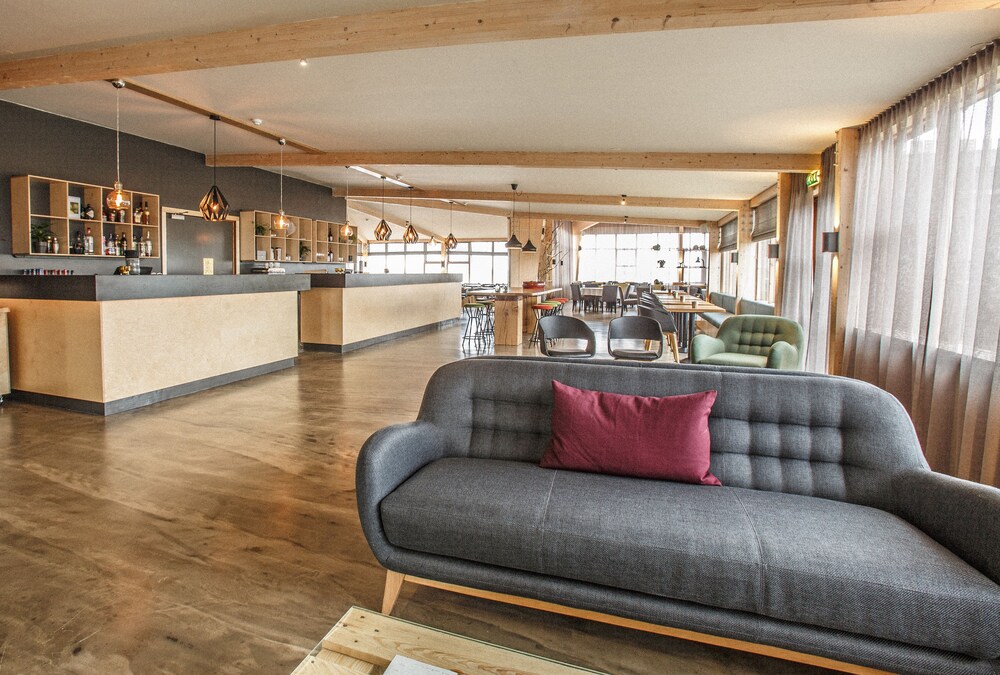 ★ 4.0
★ 4.0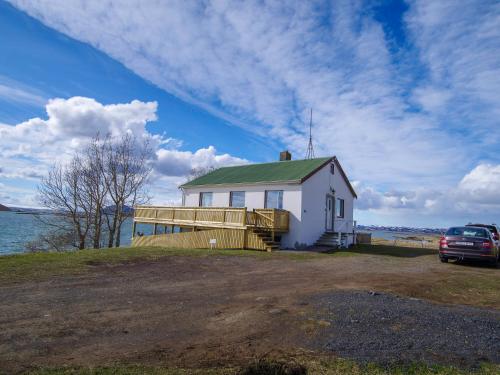 ★ 4.0
★ 4.0 ★ 4.0
★ 4.0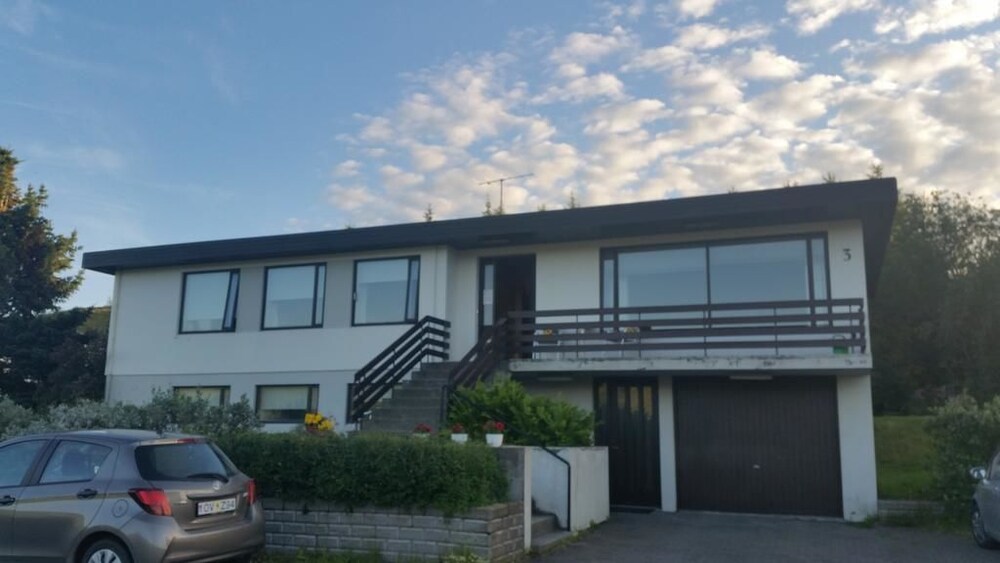 ★ 4.0
★ 4.0On the ground
Things to do in Myvatn
- Bathe at Myvatn Nature BathsJaroboaleiö 1, on a lava field just east of Reykjahlid. Milky blue geothermal water like the Blue Lagoon but half the price and quarter the crowds. ISK 6755 entry, open 12-10pm summer, shorter winter. Sunset here in July is genuinely magical.
- Walk Namafjall geothermal field6km east of Reykjahlid on Route 1. Boiling mud pots, sulphur fumaroles, orange-yellow-black landscape. Free, boardwalks, always open. Smells strongly of sulphur; don't wear silver jewellery. About 45 minutes. Combine with the short climb up Namafjall ridge itself for a wider view over the whole geothermal field.
- Explore the Dimmuborgir lava labyrinthSouth of the lake off Route 848. A field of grotesque lava pillars — legend says Christian devils were trapped here. Free, marked trails from 30 minutes to 2 hours. The 'Church' formation is a natural lava arch worth finding.
- Eat at VogafjosVogafjos Farm on Route 1 east of Reykjahlid. Farm-to-table restaurant on a working dairy — you can watch the cows being milked at 5pm and 7am. Mains ISK 3930-ISK 5527 (arctic char, lamb, homemade cheese). Open 8am-9pm.
- See the Grjotagja lava caveJust south of Reykjahlid, signposted off Route 1 down a short gravel track. A small fissure cave with a steaming geothermal pool, once used for bathing and now far too hot at over 50 degrees. Free, no set hours, five minutes on foot from the car park.
- Loop the Skutustadir pseudocratersOn the lake's south shore, 15km from Reykjahlid on Route 1. A gentle 2.5km boardwalk loop around crater-shaped mounds formed when lava met the lake's wetlands. Free, open year-round, roughly 45 minutes, easier walking than Hverfjall and good for families.
The essentials
Hverfjall crater rim walk (4 km)
Drive to the Hverfjall crater parking lot 5km southeast of Reykjahlid. Climb the steep gravel path (20 minutes) to the crater rim — a 1km-wide volcanic crater from a 2,500-year-old eruption. Walk the full rim (2.5km) with 360-degree views over Myvatn, the lava fields, and (on clear days) the mountains around Askja. You'll also spot Dimmuborgir's lava field to the south and the pseudocraters along the shore. Return via the same path.
Getting there & around
Myvatn is 90km east of Akureyri on Route 1 — 75 minutes by car. Straeto bus 79 runs Akureyri-Myvatn several times weekly in summer, ISK 3071, 90 minutes. From Reykjavik it's a long drive or fly to Akureyri (45 min, ISK 22108) and drive from there. Once at Myvatn a car is essential — the sites are spread over a 30km radius and no buses connect them. Rental cars are best picked up in Akureyri or Reykjavik, since Myvatn has no agency counter. Reykjahlid is compact enough to walk everywhere — baths, supermarket, and church within 10 minutes on foot — but Namafjall, Dimmuborgir, and Krafla require a car. Check road.is before driving in winter, since Route 1 can close during storms.
Good to know
Myvatn, questions answered
Are the Myvatn midges a serious problem?
In June-July they can swarm around your face but don't bite in the biting-fly sense. Bring a head net if you're walking near the lake. August-May is midge-free. Windy days push them away entirely.
Is Myvatn Nature Baths better than the Blue Lagoon?
Cheaper (ISK 6755 vs ISK 9826+), quieter, better view (into the volcanic landscape rather than a car park). The Blue Lagoon has more facilities and is 40 minutes from the airport. If you're in the north, Myvatn wins.
How many days should I spend at Myvatn?
Most itineraries budget one night, but two full days let you cover the Nature Baths, Hverfjall, Dimmuborgir, Namafjall, and Krafla without rushing. If you're also doing the Diamond Circle to Husavik and Dettifoss, add a third night. One night is enough only if you're just passing through on the Ring Road.
Is Myvatn worth visiting in winter?
Yes, though the appeal shifts — you come mainly for the Nature Baths under the northern lights rather than for hiking. Snow can make Hverfjall and Dimmuborgir's trails slippery or closed, and Route 1 occasionally shuts after storms. Book a car with good winter tyres and check road.is daily.
Keep exploring
Nearby areas

167 stays
Akureyri
Iceland's second city on a fjord in the north — botanical garden, ski slopes, and the base for Myvatn and whale-watching.
Stays in Akureyri ↗
7 stays
Husavik
Whale-watching capital of Europe on the north coast — 95% success rate, wooden boats, and yes, the Eurovision film town.
Stays in Husavik ↗
140 stays
Egilsstadir
Practical Ring Road town in east Iceland — Lagarfljot lake, the Hallormsstadur forest, and gateway to the east fjords.
Stays in Egilsstadir ↗Doing good is the business: every booking through Stay Iceland funds one verified tonne of carbon removal — same room, same price, no markup.
Search stays